Regular pool water testing keeps swimming water safe, clear, and comfortable.
Balanced chemistry protects swimmers, surfaces, and equipment while preventing:
- Algae
- Cloudiness
- Wasted chemicals
Problems like eye irritation, slippery walls, or scale buildup usually trace back to unnoticed chemical drift.
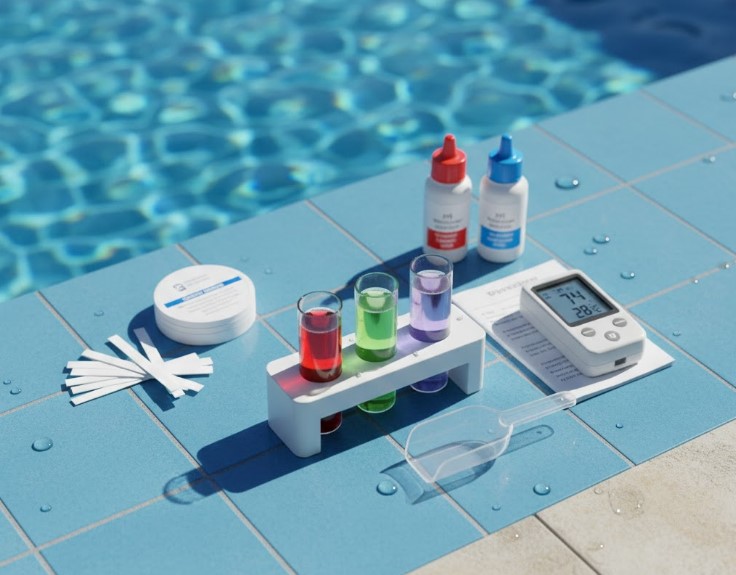
Three main testing approaches cover different needs and schedules. Test strips offer speed and convenience for frequent checks.
Liquid drop kits deliver stronger accuracy for routine maintenance. Lab testing provides the most detailed picture and helps resolve persistent or complex water problems.
Why Pool Water Testing Matters
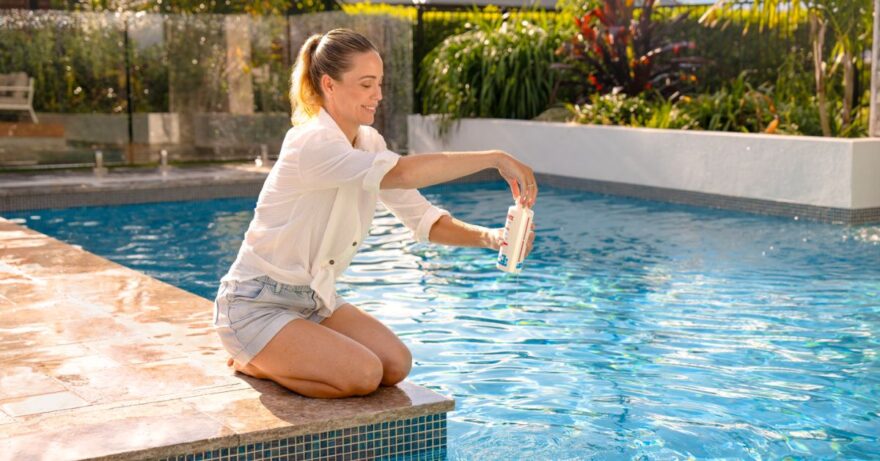
Clean water depends on balanced chemistry, not guesswork.
Every swimmer interaction, weather change, and chemical addition shifts water balance in ways that are not always visible.
Testing serves as an early warning system, ensuring sanitation remains effective, surfaces are protected, and equipment operates efficiently.
Chlorine remains the primary sanitizer, yet performance depends on supportive conditions. pH controls chlorine strength, stabilizer protects it against sunlight loss, and alkalinity keeps pH stable.
Calcium levels affect surface integrity and heater efficiency. When one value drifts, other values often follow.
Several problems trace back to a chemistry imbalance and usually appear in predictable ways once testing gets skipped or done incorrectly.
- Skin and eye irritation caused by low or high pH
- Weak sanitation is linked to poor stabilizer control
- Scale buildup or cloudy water is tied to excess calcium
- Plaster damage caused by aggressive, low-calcium water
Inaccurate testing often leads to unnecessary chemical use. Adding products without clear data can create a chemical lock, staining, or water that never quite clears.
Metal contamination may remain hidden until brown or green stains appear on steps and walls.
Environmental stress increases risk since heavy bather loads, rain, heat waves, and recent chemical adjustments all push water chemistry out of balance faster than expected.
Regular testing also plays a key role when pool care is shared with professionals. Dolphin Pool service, for example, relies on consistent, accurate water data to keep sanitation stable between visits, especially during peak swim season or extreme weather swings.
When homeowners maintain basic testing habits, service adjustments become more precise, chemical use stays efficient, and small issues get corrected before they turn into surface damage, algae blooms, or equipment strain.
Test Strips – Convenience with Limitations
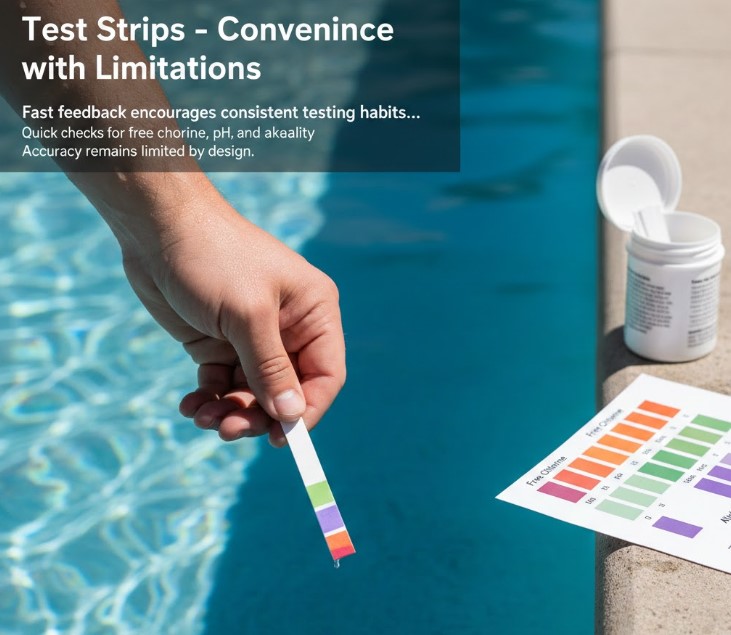
Fast feedback encourages consistent testing habits, which explains the popularity of test strips.
A strip gets dipped elbow deep into pool water, held still for about fifteen seconds, then compared to a printed color scale.
Ease of use supports frequent checks and quick decisions.
No measuring or reagent handling is required. Cost stays low, making strips practical for daily use.
Compact storage allows testing after storms, parties, or hot afternoons. Core readings remain clear enough for routine monitoring.
Several strengths make strips useful in specific situations:
- Quick checks for free chlorine, pH, and alkalinity
- Simple process suitable for beginners
- Portable design that fits pool bags or service kits
Accuracy remains limited by design. Color comparison depends on lighting conditions and eyesight.
Very high chlorine levels can bleach pads and show falsely low readings. Testing scope stays narrow, so metals, phosphates, bacteria, and other hidden contributors go undetected.
Technique still matters even with simple tools. Moisture exposure damages unused strips, especially when fingers touch others inside the container.
Testing near returns or feeders skews results. Elbow depth sampling gives a better picture of well-mixed water.
Daily spot checks, entry-level pool care, and casual maintenance schedules benefit most using strips as a monitoring tool rather than a diagnostic solution.
Liquid Drop Kits – Greater Accuracy and Control
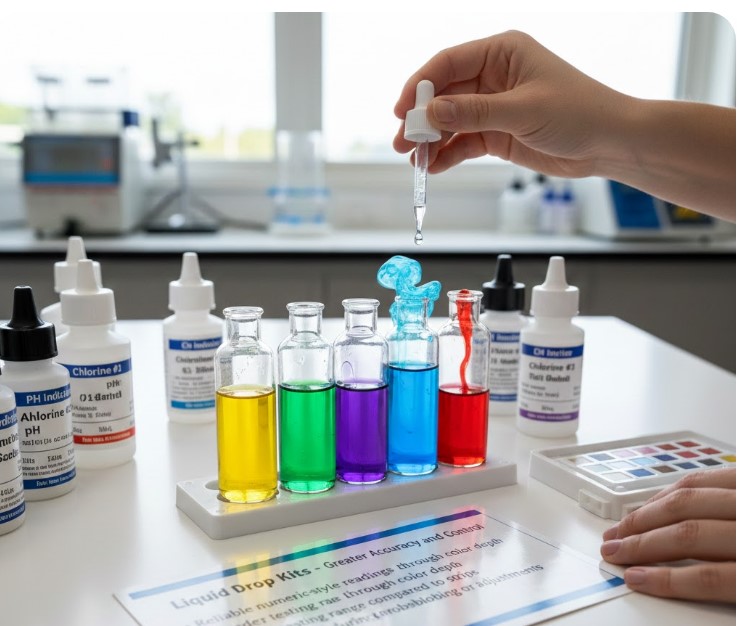
More precise control begins with liquid drop testing. Water samples get placed into clear vials, reagents added drop by drop, then colors compared after gentle swirling.
Accuracy improves noticeably across multiple parameters.
Readings for pH, free chlorine, total alkalinity, calcium hardness, and cyanuric acid stay consistent when the proper technique is used.
Comprehensive kits test seven or more values and match tools used by many service professionals. Precise dosing reduces wasted chemicals over time.
Drop testing supports detailed water management in several ways:
- Reliable numeric-style readings through color depth
- Broader testing range compared to strips
- Better control during troubleshooting or adjustments
Extra time and care are required. Counting drops incorrectly or shaking vials introduces errors.
Reagents lose accuracy over time and usually need replacement each year. Storage in a cool, dry, shaded location protects test integrity.
Small technique details make a noticeable difference. Droppers held vertically ensure uniform drop size.
Swirling instead of shaking avoids bubbles that distort color. White or natural light improves reading accuracy.
Weekly maintenance, chemical balancing, and persistent water problems benefit most using liquid drop kits.
Lab Testing – Professional-Grade Precision
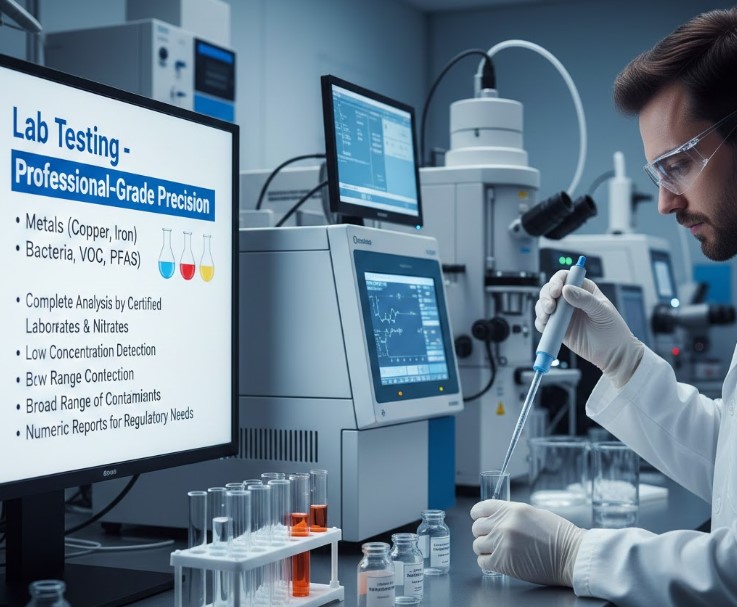
Some water issues demand data that home kits cannot provide. Lab testing offers the most complete analysis available through in-store testing or mail-in services processed by certified laboratories.
Detection reaches very low concentrations and covers a broad range of contaminants.
Reports include numeric results suitable for complex water sources and regulatory needs.
Independent labs focus strictly on analysis rather than product sales.
Lab panels commonly include data that home kits cannot capture:
- Metals such as copper and iron
- Phosphates and nitrates that feed algae
- Bacteria, VOCs, and PFAS
Processing time varies between two and ten days. Costs increase, often exceeding one hundred dollars for full panels.
Shipping and handling add extra steps compared to home testing.
Recurring problems, unexplained staining, odd odors, and inconsistent DIY results justify lab analysis. Seasonal openings and closings benefit as well.
Well water users gain strong value since mineral content varies widely and changes over time.
How to Properly Collect a Water Sample
Accurate testing starts before any strip, drop, or lab analysis occurs.
Circulation should run at least fifteen to thirty minutes before collection to ensure uniform mixing.
Containers need cleaning and two rinses using pool water.
Sample location plays a major role in accuracy.
Elbow depth sampling away from jets, skimmers, and feeders prevents false readings caused by localized chemical concentration.
Handling after collection affects results just as much as sampling. Containers should get sealed immediately to limit air exposure.
Delivery to a store or lab needs prompt action and protection against heat. Leaving samples inside vehicles risks chemical changes before testing occurs.
When and How Often to Test
Testing frequency depends on parameter stability and environmental stress.
Some values change quickly while others shift gradually.
Regular schedules help maintain balance without overcorrecting:
- Free chlorine tested two to three times per week using strips or drops
- pH checked weekly using strips or drops
- Total alkalinity tested weekly using drops
- Calcium hardness and cyanuric acid checked monthly using drops or lab panels
- Metals tested monthly or as needed using lab analysis or specialty strips
- Phosphates checked monthly using lab panels or specialty kits
- Salt levels in saltwater pools checked monthly using salt strips or digital readers
- Bacteria, VOCs, and PFAS tested quarterly or annually using lab analysis
Digital and App-Based Testing
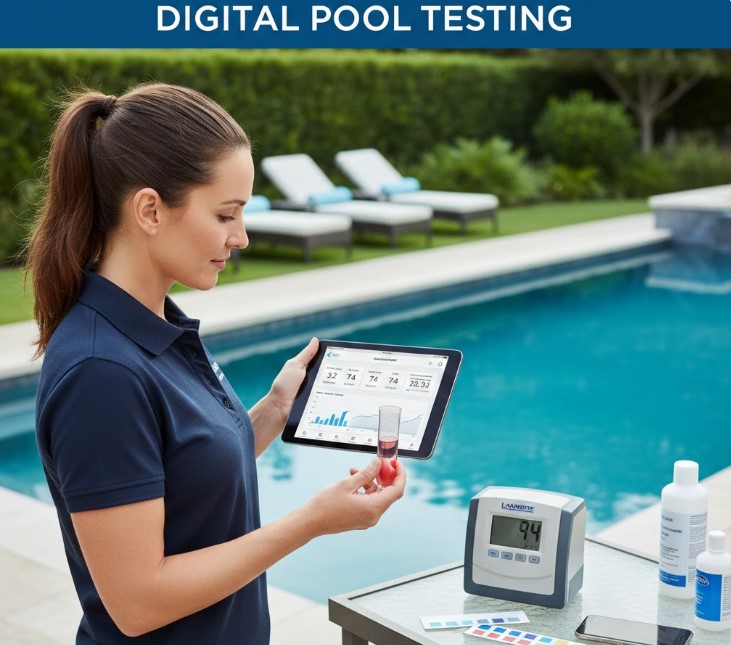
Technology adds convenience and consistency to pool testing routines.
Digital testers combine reagent accuracy with electronic color interpretation.
Devices like ColorQ Pro or LaMotte readers convert color changes into numeric values and reduce human error.
App-connected strips use phone cameras to analyze results automatically. Certain systems allow scanning strips through mobile apps for faster interpretation and record keeping.
Benefits and limitations coexist with digital tools. Speed and consistency improve, yet calibration remains necessary.
Reagents still expire, and setup accuracy affects results.
Pool professionals and tech-oriented owners gain the most value using digital testing systems as part of a broader maintenance approach.
Choosing the Right Water Testing Method for Your Pool
Consistent testing prevents costly repairs and uncomfortable swimming conditions.
Test strips support frequent checks and early detection of basic changes.
Liquid drop kits deliver reliable weekly control and protect surfaces and equipment. Lab testing reveals hidden contaminants and resolves complex or recurring problems.
Balanced use of all three methods keeps pool water clean, safe, and predictable across seasons and usage levels.