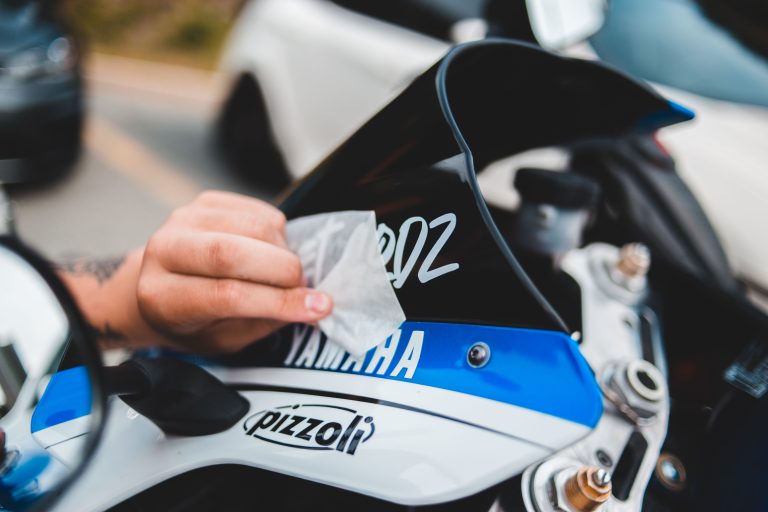
A windscreen takes more punishment per square inch than any other part of a bike. It eats the bugs, grit and road spray that would otherwise land on your visor, and it does all of it parked in full sun. Then most of us clean it the way we clean a kitchen window – and quietly grind a season of haze into the plastic.
Here is the part most guides bury: the cleaner you choose matters far less than the two things that actually wreck a screen – heat and dry abrasion. Get the technique right and plain soap and water will keep a screen clear for years. Get it wrong and no premium spray will save it.
Your windscreen is softer than the dirt sitting on it
Most windscreens are polycarbonate or acrylic, not glass, and that trade is deliberate. Polycarbonate has roughly 250 times the impact strength of glass and about 30 times that of acrylic, which is why a stone at motorway speed dents it instead of shattering it. The price is surface hardness. Acrylic is harder and scratches less readily; polycarbonate will mark from a fingernail.
Coatings add a second layer of risk. Hardcoats, UV inhibitors and anti-fog treatments are often only 2–5 microns thick. You can clean the plastic perfectly and still strip the layer that keeps it clear.
| Property | Polycarbonate | Acrylic |
|---|---|---|
| Impact strength | ~250× glass; one of the toughest clear plastics | ~30× weaker than polycarbonate; can shatter |
| Surface hardness | Low unless hard-coated | Higher; resists light scratching |
| Light transmission | ~88% | ~92% |
| Yellowing over time | Common without a UV coating | Resists it well |
| Repair | Difficult to polish back | Polishes more easily |
Material figures drawn from a readyplastics.com polycarbonate-versus-acrylic comparison and SABIC’s LEXAN datasheet; both retrieved September 2026.
My own read: acrylic’s resistance to yellowing is genuinely appealing, but on a motorcycle I would still take polycarbonate. A cracked screen at 70 mph is a safety event; a slightly softer one is a polishing chore.
The scratch that started at the petrol station
The most common way a windscreen dies is a forecourt squeegee. The bucket is filthy, the rubber blade is tipped with grit, and dragging it across plastic is a controlled sanding job. Owner’s manuals are blunt: National Cycle’s windshield-care guidance tells owners to avoid glass cleaners entirely and warns that alcohol, ammonia and strong solvents cause permanent damage.
LEXAN’s own cleaning and care instructions go further, banning squeegees, razor blades and brushes by name, along with anything abrasive or highly alkaline.
Dry wiping is the same mistake with worse manners. Dust on a screen turns a dry microfiber into sandpaper. Rinse first, every time, and work from the top down.
What is actually safe to put on the plastic
The one rule every manufacturer agrees on is mild soap, lukewarm water and a soft cloth. SABIC lists ordinary household dish liquids – Joy, Palmolive – as compatible with its polycarbonate. National Cycle’s manuals recommend “a non-abrasive soap such as dishwashing liquid.” Harley-Davidson’s service information states flatly that ammonia-based window cleaners cause permanent yellowing.
That makes the popular “never use dish soap” advice worth qualifying. The problem is not dish soap as a category; it is aggressive, high-degreaser formulas and heavy concentrations. Standard mild dish liquid, well diluted, is approved by the companies that make the material.
Keep these off the screen: ammonia glass cleaners, isopropyl alcohol, petrol and kerosene, acetone, toluene and xylene, solvent-heavy bug and tar removers, glass Rain-X, paper towels, brushes and squeegees. Whether you ride behind a tall touring motorcycle windshield or a stubby fly screen, the chemistry does not change.
A ten-minute routine that will not cost you a screen
- Cool it down. Park in shade and let the screen reach ambient temperature. Hot plastic stains more easily and softens under a cloth.
- Rinse. Lukewarm water, low pressure, top to bottom. SABIC permits a pressure washer at a distance and under about 100 bar (1,450 psi) – never close up.
- Soak the bugs. Lay a soaked microfiber over the screen and wait. Harley-Davidson specifies 15–20 minutes.
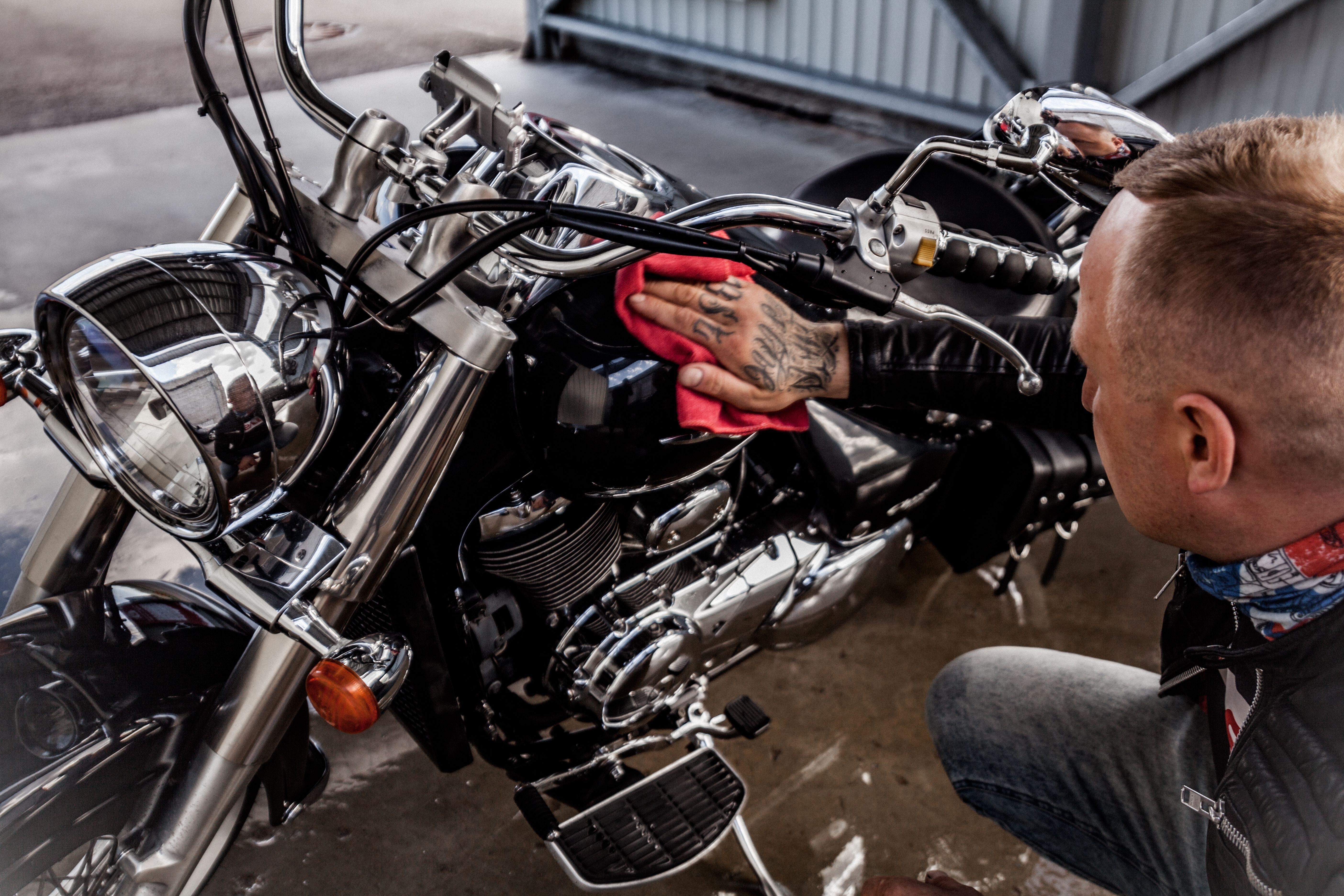
- Wipe in straight lines. Top to bottom, gentle, flipping and rinsing the cloth often. Circles leave swirl marks that flare in headlights.
- Rinse and dry. Blot with a clean, plush microfiber. No pressure.
- Protect. A plastic-safe polish such as Novus No. 1 or Plexus leaves a sacrificial layer that makes the next clean easier.
The bug problem, and a trick I would skip
Insect remains are acidic, and they bond harder to plastic once heat and UV have baked them on. The answer is dwell time, not friction. Riders in the comments on Motorcycle.com’s windshield wash guide swear by soaking a cloth in Coca-Cola and laying it on the screen, and the phosphoric acid does soften the shells. I would not do it. You are leaving sugar on a porous, static-prone surface, and the same acid is not kind to a hardcoat over the years. Warm water with a capful of baby shampoo does the job and rinses clean.
When the haze is already there
Light scratches and swirls can be reduced with a low-abrasive plastic polish like Novus No. 2 or Meguiar’s Plast-X. Test a hidden corner first and use light pressure, because the goal is to avoid cutting through the hardcoat, not to chase every mark.
Yellowing is a separate problem. Uncoated polycarbonate yellows with UV exposure and is notoriously hard to polish back; acrylic resists yellowing and polishes more easily, at the cost of impact strength. Deep scratches and cracks are not a polishing job. A screen with heavy crazing scatters light at night – a halo around every headlight – and is worth replacing rather than refurbishing.
The kit worth keeping on the bike
A small spray bottle of diluted mild soap or a plastic-safe cleaner, and one plush microfiber reserved for the screen alone. That last point matters: a cloth that has wiped brake dust or chain grime holds grit that will scratch plastic no matter how well it was rinsed. Shade and water do most of the work; the bottle is for the middle of a long ride.
How this was put together: I checked the cleaning instructions published by SABIC (makers of LEXAN polycarbonate) and National Cycle, plus Harley-Davidson’s service information and a material comparison of polycarbonate and acrylic, all during September 2026. Where sources disagreed on dish soap, I’ve said so. Prices and product names were not compared, so treat brand mentions as examples rather than endorsements.