
The role of a Product Manager has changed. We are no longer just building features. We are building businesses.
When I started my career, product management was simple. We listened to users. We wrote requirements. We worked with engineering to launch the product. Then, we handed it off to marketing and sales. They figured out how to sell it. We moved on to the next feature.
That model is broken today. The market is too crowded. The cost of acquiring customers is too high. The distance between “building” and “selling” needs to be zero.
Welcome to the era of the Full-Stack Product Manager.
This is not a buzzword. It is a survival requirement. A full-stack PM doesn’t just manage the product backlog. They manage the entire value chain. They understand how the product is built, how it is discovered, how it is adopted, and how it is monetized.
Two critical skills define this new era: mastering “Decision Science” and driving a Self-Service Go-To-Market (GTM) strategy. Let’s break down why these matter and how you can master them.
The Evolution: Why the Traditional PM is Struggling

The old way of product management worked when software was scarce. If you built a decent tool, people would use it. Today, software is abundant. The barrier to entry is low. Competition is fierce.
If your only skill is execution, you are a commodity.
The traditional PM focuses on outputs. They measure success by features launched and bugs fixed. The full-stack PM focuses on outcomes. They measure success by revenue generated, customer retention, and market share.
This shift requires a new mindset. It requires you to step outside the product and look at the entire business ecosystem.
Mastering Decision Science: Moving Beyond Gut Feelings
Product Management is fundamentally about making decisions. What do we build next? Who is our target audience? How do we price this?
Historically, many PMs relied on intuition. They called it “product sense.” While intuition is valuable, it is not enough in today’s data-rich environment.
Decision Science is the antidote to guesswork. It is the application of data, logic, and structured frameworks to make better choices.
Stop Guessing, Start Measuring
Decision Science starts with data. You need to know what is happening in your product. Every feature should have a success metric attached to it before a single line of code is written.
However, data alone is not Decision Science. Data tells you what happened. Decision Science helps you understand why it happened and what to do next.
Frameworks for Better Choices
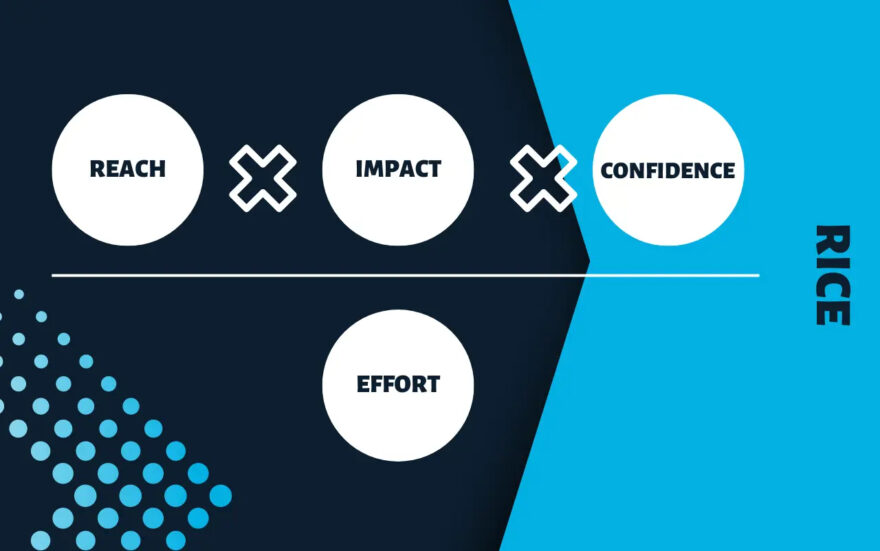
Full-stack PMs use frameworks to organize their thinking. They don’t just react to the loudest customer or the highest-paid person’s opinion (HiPPO).
For example, when prioritizing features, do not just use a simple spreadsheet. Use models like RICE (Reach, Impact, Confidence, Effort) or the Kano Model. These frameworks force you to quantify your assumptions. They make your decisions defensible.
The Role of Experimentation
Decision Science embraces uncertainty. You will never have perfect information. The key is to make small, calculated bets.
This is where experimentation comes in. A/B testing is not just for changing button colors. It is for testing core hypotheses about user behavior. If you are not constantly running experiments, you are flying blind.
By mastering Decision Science, you move from being an order-taker to a strategic leader. You can prove your impact with numbers, not just anecdotes.
Self-Service GTM: The Product is the Salesperson

The second pillar of the Full-Stack PM is mastering the Go-To-Market strategy. Specifically, the shift towards Product-Led Growth (PLG) and self-service models.
In the past, enterprise software required a massive sales team. You needed account executives to explain the value, do demos, and close the deal.
Today, buyers want to try before they buy. They want a frictionless experience. They do not want to talk to a salesperson until they are ready.
This means your product must sell itself.
Designing for Discovery and Adoption
A self-service GTM strategy starts with discovery. How do people find your product? The full-stack PM understands SEO content strategy. They know how to build features that encourage virality and referrals.
Once a user finds the product, adoption must be seamless. The onboarding experience is the most critical part of the product. If a user cannot find value in the first five minutes, they are gone.
You need to design clear pathways to the “Aha!” moment. Reduce friction. Eliminate unnecessary steps. Use empty states and tooltips effectively.
Pricing and Packaging as a Product Feature
Pricing is not a finance decision. It is a product decision. How you package and price your product directly impacts adoption and revenue.
In a self-service model, your pricing tiers must make logical sense to the user. The jump from a free tier to a paid tier must feel natural and justified by the value provided.
A full-stack PM constantly analyzes pricing data. They experiment with different packaging options to optimize conversion rates and maximize Customer Lifetime Value (LTV).
The Feedback Loop
The beauty of a self-service GTM is the immediate feedback loop. You see exactly where users drop off in the funnel. You can track which marketing channels bring in the highest-quality leads.
This data feeds directly back into the product development process. The GTM strategy informs the product roadmap, and the product roadmap enables the GTM strategy.
Becoming a Full-Stack PM

Transitioning to a full-stack PM is not easy. It requires learning new skills outside your comfort zone. It requires you to think like a CEO, not just an engineer.
So, how do you get there?
- Learn the Business: Stop just reading about agile methodologies. Start reading about business strategy, finance, and marketing. Understand how your company makes money.
- Get Comfortable with Data: You don’t need to be a data scientist, but you need to know how to query databases and interpret dashboards. Learn SQL. Master analytics tools like Mixpanel or Amplitude.
- Study Growth: Understand the mechanics of user acquisition, activation, retention, revenue, and referral (AARRR funnel). Learn how to optimize conversion rates.
- Invest in Formal Education: The role is complex, and sometimes self-study isn’t enough. Consider structured learning programs to build a solid foundation. A comprehensive Product Management Course can provide the structured knowledge and practical frameworks needed to master these advanced skills.
The Future Belongs to the Full-Stack PM
The days of the siloed Product Manager are over. Companies need leaders who can bridge the gap between building a great product and building a successful business.
Mastering Decision Science gives you the analytical rigor to make the right choices. Mastering a Self-Service GTM strategy ensures your product actually reaches the people who need it.
This is the new standard. The Full-Stack PM is not just building software; they are engineering growth. The question is, are you ready to evolve?