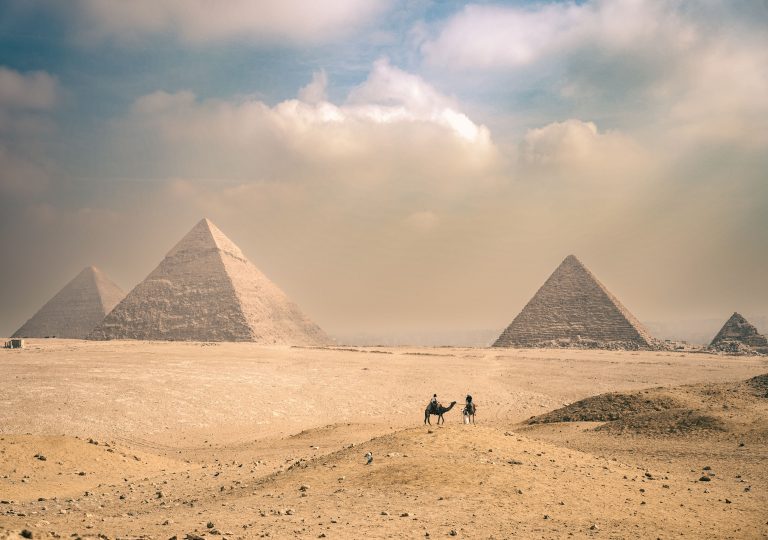
Yes, Egypt is worth visiting in 2027. The more useful question is whether the 2027 trip you are imagining is the one you should book.
Two different trips are being sold under the same year. One is an eclipse pilgrimage: crowded, expensive, and staged in 40°C heat. The other is the Nile and museum trip Egypt has been perfecting for decades, now with the Grand Egyptian Museum finally open and a currency that still favors anyone paying in dollars or euros. I would book the second and treat the eclipse as a bonus, not the reason.
Why 2027 is not a normal Egypt year
The numbers explain the crowds. Egypt welcomed about 19 million international visitors in 2025, a 21 percent jump on 2024 and a record. Tourism Minister Sherif Fathy said in October 2026 that arrivals should reach roughly 20 million by the end of that year, with revenue above $20 billion. The government’s target is 30 million a year by 2030.
The growth is visible on the ground. The Grand Egyptian Museum opened to the public on 4 November 2025 and drew between 4.5 million and 5 million visitors in its first year, averaging about 15,000 a day. It is a timed-entry museum with a daily cap now, not a place you tack onto a Cairo afternoon.
Entry has been simplified at the edges. A standard tourist visa on arrival still costs $30 and is valid for 30 days. Since late 2026, Cairo International has been phasing in a digital visa-on-arrival, paid by card, at about $36 including the service fee. Travelers arriving by air at Sharm El-Sheikh for a resort stay of under 15 days in Sharm, Dahab, Nuweiba or Taba still get a free entry stamp. The free emergency-entry visa for air arrivals at Luxor and Aswan has been extended through the summer seasons of 2026 and 2027, from May to the end of October.
One 2027 change will not help most Nile trips. The first line of Egypt’s high-speed electric railway is targeted to open in July 2027, but it runs from Ain Sokhna on the Red Sea to Alexandria and Marsa Matrouh. The Cairo to Luxor and Aswan line is still under construction, and no passenger date has been announced. If an operator promises a bullet train between Cairo and Luxor in 2027, ask for the timetable.
The eclipse is both the best and worst reason to go
On 2 August 2027, the Moon’s shadow crosses Egypt. Totality lasts about 6 minutes 23 seconds near Luxor, the longest total eclipse over land until 2114, according to Space.com’s 2027 eclipse guide. The Sun sits roughly 82 degrees above the horizon, and August cloud cover in Upper Egypt is close to zero. It is, genuinely, a once-in-a-lifetime event.
It is also the most expensive week to be in Egypt in 2027. Some Luxor hotels are selling fixed four-night eclipse packages with minimum stays, and at least one West Bank property has published a four-night package at $10,000 to $12,000 per room. Five-star rooms for eclipse week are already scarce. If you have not booked by the time you read this, you are competing for the leftovers.
Geography matters more than most people realize. Luxor, Sohag and Abydos sit inside the path of totality. Aswan does not. It gets a 99.8 percent partial eclipse, which sounds close and is not. Hurghada reaches 98.5 percent, Cairo 95 percent, Sharm El-Sheikh about 95.6 percent. Even 99 percent is not totality. If you book a Red Sea resort and plan to “see the eclipse,” check the exact coordinates first.
Then there is the heat. This is early August in Upper Egypt, when midday temperatures can reach 43°C. Totality arrives around 1pm, almost directly overhead. Standing in the worst heat of the day, in a crowd, in the dark, is a spectacular thing to do once. It is not a relaxed family holiday.
| Location | Totality | What it means for your booking |
|---|---|---|
| Luxor | 6 min 19 s | Best base: airport, hotels, temples and Nile cruises. Peak prices. |
| Sohag | 6 min 22 s | Closest to the maximum, far fewer tourists, limited hotels. |
| Abydos | 6 min 21 s | Temple backdrop; day trip from Sohag or Luxor. |
| Marsa Alam | 5 min 30 s | Red Sea base with its own airport. Hot but almost always clear. |
| Aswan | None (99.8% partial) | Not in totality. Do not book here for the eclipse. |
| Hurghada | None (98.5% partial) | Resort convenience, no totality. |
| Cairo and Giza | None (95% partial) | The pyramids do not make it total. |
Totality durations from Space.com’s 2027 eclipse guide. Partial percentages from eclipse path data. Confirm your exact viewing site before booking.
My read: the eclipse is a specialist trip, not the default Egypt trip. If you want the pyramids, Karnak, the Valley of the Kings and a Nile cruise without a once-in-a-century crowd, go in November 2027 instead. If you want the eclipse, book the bed before the flight and accept that the trip will cost more and move slower.
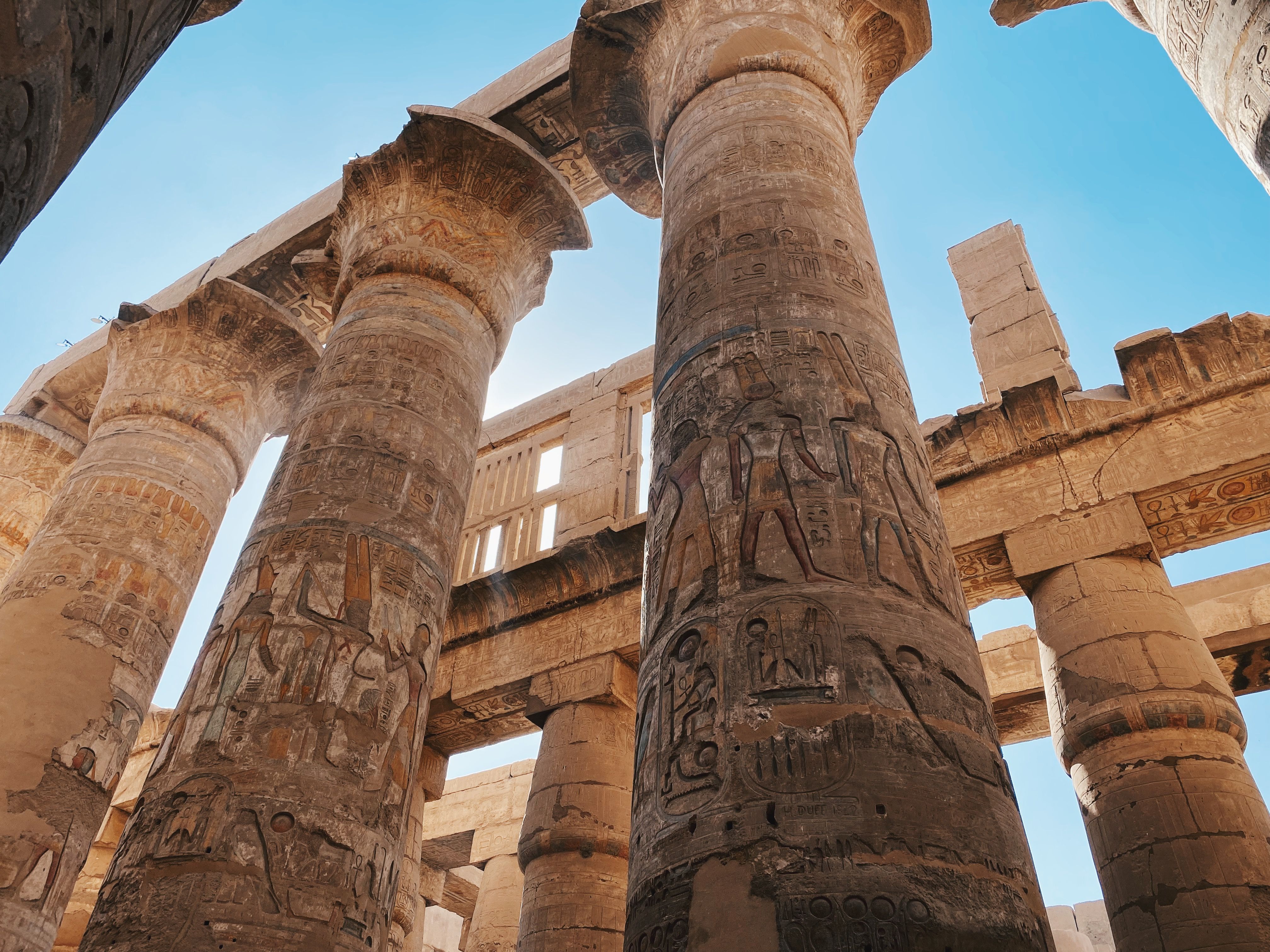
So which would you take: six minutes of darkness in 43°C with a large crowd, or Karnak at 7am in November with the light coming through the columns and room to stand still? I know which one I would choose. I also know why plenty of people would choose the other.
What a 2027 trip actually costs
The pound has weakened enough that daily life is cheap. In 2026, $1 buys roughly 48 to 50 Egyptian pounds. A bowl of koshari costs less than a dollar. A night in a good three-star hotel can cost $40 to $70, and a ride-hailing trip across Cairo is a few dollars. Planning bands for 2026 put budget travel at about $40 to $60 a day and mid-range at $90 to $170, excluding international flights.
The cheap-trip math breaks at the ticket window. Foreign visitor prices are set in Egyptian pounds and revised often. As of October 2026, the Giza plateau was EGP 700, Karnak EGP 600, the Valley of the Kings EGP 750, and Abu Simbel EGP 750, with students paying half on a valid student card. The Grand Egyptian Museum is separate, with foreign adult admission in the region of EGP 1,450 to 1,700 depending on ticket type and the current price list. Add a guide, a driver and the extras, and a serious sightseeing day can cost more than your bed and meals combined.
Book the museum through the official Grand Egyptian Museum ticketing site, not a reseller. Tickets are timed, non-refundable, and tied to a name. In its first week, the museum sold 27,000 tickets against a stated capacity of 15,000 to 20,000 and closed early. This is the failure mode you are avoiding.
Flights are the other variable. Winter fares from Europe and North America are higher, and regional tensions in 2026 pushed some airlines to trim capacity. A fare that looks good in June may not exist in December. Set a price alert before you set an itinerary.
The Nile is where your money should go
If you do one expensive thing in Egypt, make it the river. The Nile between Luxor and Aswan is the reason the country works as a trip rather than a checklist of ruins. You wake up beside a temple, eat lunch while the bank slides past, and arrive somewhere new without another airport.
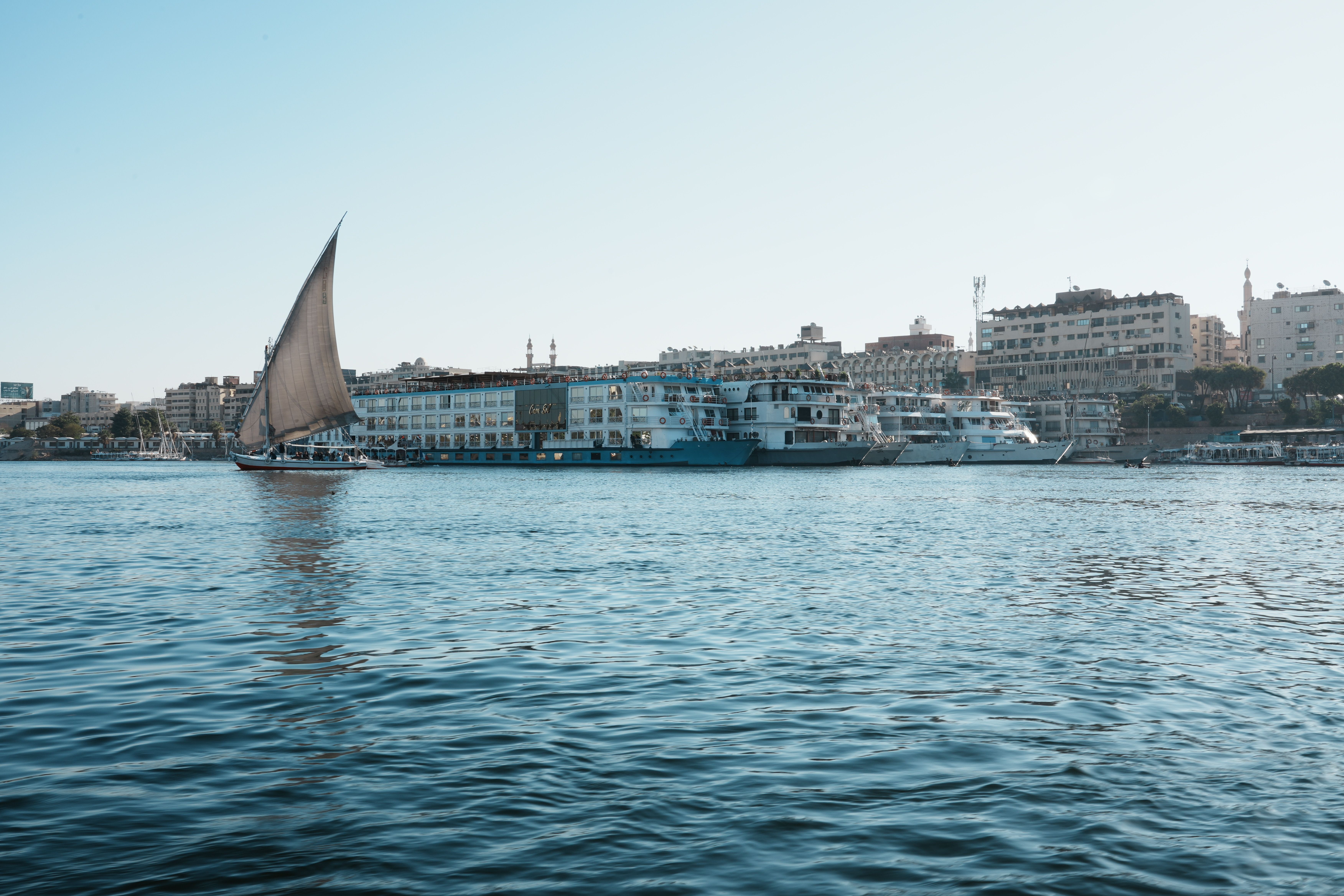
The default is a big motor cruiser: 50 to 80 cabins, a pool, a bar, fixed meal times and 100 or more passengers. It is good value and it suits families. It is not a quiet experience, and the moorings are usually the town quays where every other ship is tied up.
A dahabiya is the alternative: a traditional twin-masted sailing boat with four to ten cabins, no engine noise when the wind is right, and moorings at islands and villages the big ships cannot reach. You pay for that. A four-night dahabiya in high season has a median published fare of about $2,260 per person, against about $1,000 for a mid-range motor cruiser and $1,853 for a five-star deluxe ship, according to a September 2026 survey of 3,383 fares across 201 vessels. The dahabiya median is more than double the mid-range ship.
It is a lot of money. It is also the difference between a floating hotel and a boat that feels like it belongs on this river. One option is the Dahabiya Nile Cruise run by Princess Farida, an eight-suite boat with three- and four-night sailings between Luxor and Aswan. Compare the itinerary, not just the price. The smaller-boat advantage is the stops between the big temples, not the thread count.
The table below is the clearest way to see what the river costs.
| Boat type | Median 4-night fare | Typical per night | Best for |
|---|---|---|---|
| Budget ship | $800 | $160 to $200 | First-timers watching the budget |
| Mid-range ship | $1,000 | $214 to $250 | Families and the classic itinerary |
| Five-star deluxe | $1,853 | $344 to $463 | Pool, more space, fixed schedule |
| Luxury ship | $4,209 | $693 to $1,052 | Suite-level service |
| Dahabiya | $2,260 | $458 to $565 | Couples and small groups wanting quiet |
Median published fares per person, sharing a double cabin, four nights from Luxor to Aswan, high season October to April. Source: This Is Egypt’s survey of 3,383 fares across 201 vessels, September 2026. Festive weeks cost more.
Is Egypt safe? Depends which Egypt you mean
The honest answer is that the Egypt most tourists visit is not the Egypt in the travel warnings, and the distinction matters. The UK Foreign Office travel advice for Egypt advises against all travel to North Sinai and within 20km of the Libya border, and against all but essential travel to parts of the northern Sinai, eastern Ismailiyah and the Western Desert outside listed routes and oases. Cairo, Giza, Luxor, Aswan, the Red Sea resorts and the standard Nile corridor are not covered by those warnings.
None of that makes them risk-free. The FCDO’s own framing is blunt: “No travel can be guaranteed safe.” Australia’s Smartraveller advises a high degree of caution across Egypt, citing terrorism and an unpredictable regional situation. In 2026, spillover from the Iran war disrupted flights and slowed arrivals. The tourism minister attributed part of the slowdown to regional tensions and higher airline costs. Buy insurance that covers cancellation and medical evacuation, and check your government’s advice again the week you fly.
Petty crime is low by the standards of most big cities. Tourist scams are not. The classic is the Giza camel or horse ride whose agreed fare is redefined as one-way once you are a kilometre from the gate. The fix is boring and effective: agree the full return price in writing, photograph it, and do not board otherwise. The second classic is the driver who takes you to his cousin’s papyrus shop for a commission. Say “no stops” before you get in, or use ride-hailing where it works.
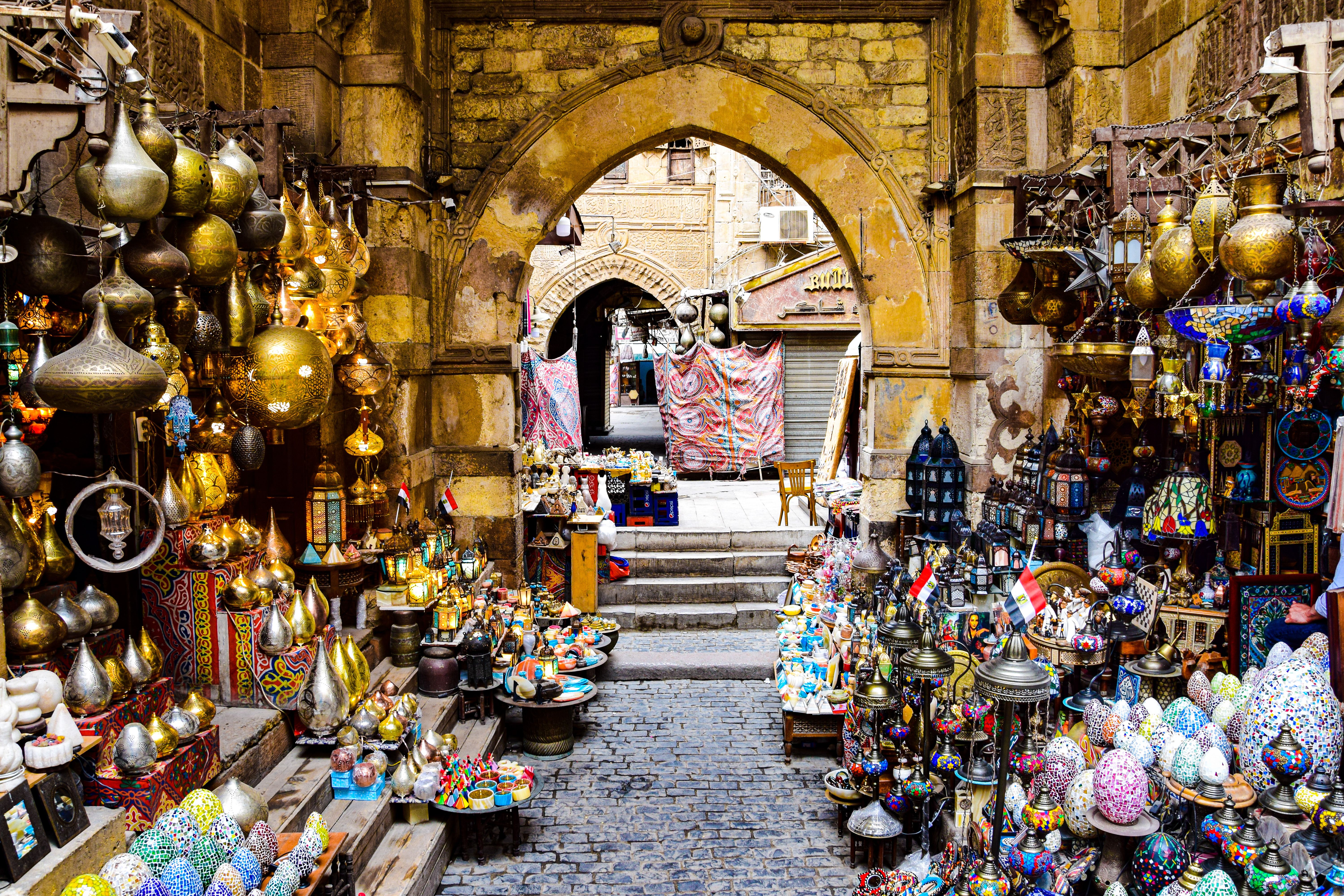
Harassment is the part guidebooks soften. Sexual harassment is a documented and common problem, especially in crowded markets and on public transport. Women traveling alone should expect stares, comments and the occasional follower. A modest dress code away from resort beaches, a firm “la, shukran” and hotel-arranged transport after dark will not solve the culture, but they reduce the friction. None of this is a reason to skip the country. It is a reason to arrive informed rather than surprised.
The bigger risk to a 2027 trip is disruption: a cancelled flight, a closed border crossing, a heatwave, or an itinerary that assumes everything runs on time. Build one buffer day into each end of the trip. It is the cheapest insurance you can buy.
The Red Sea is the part people underestimate
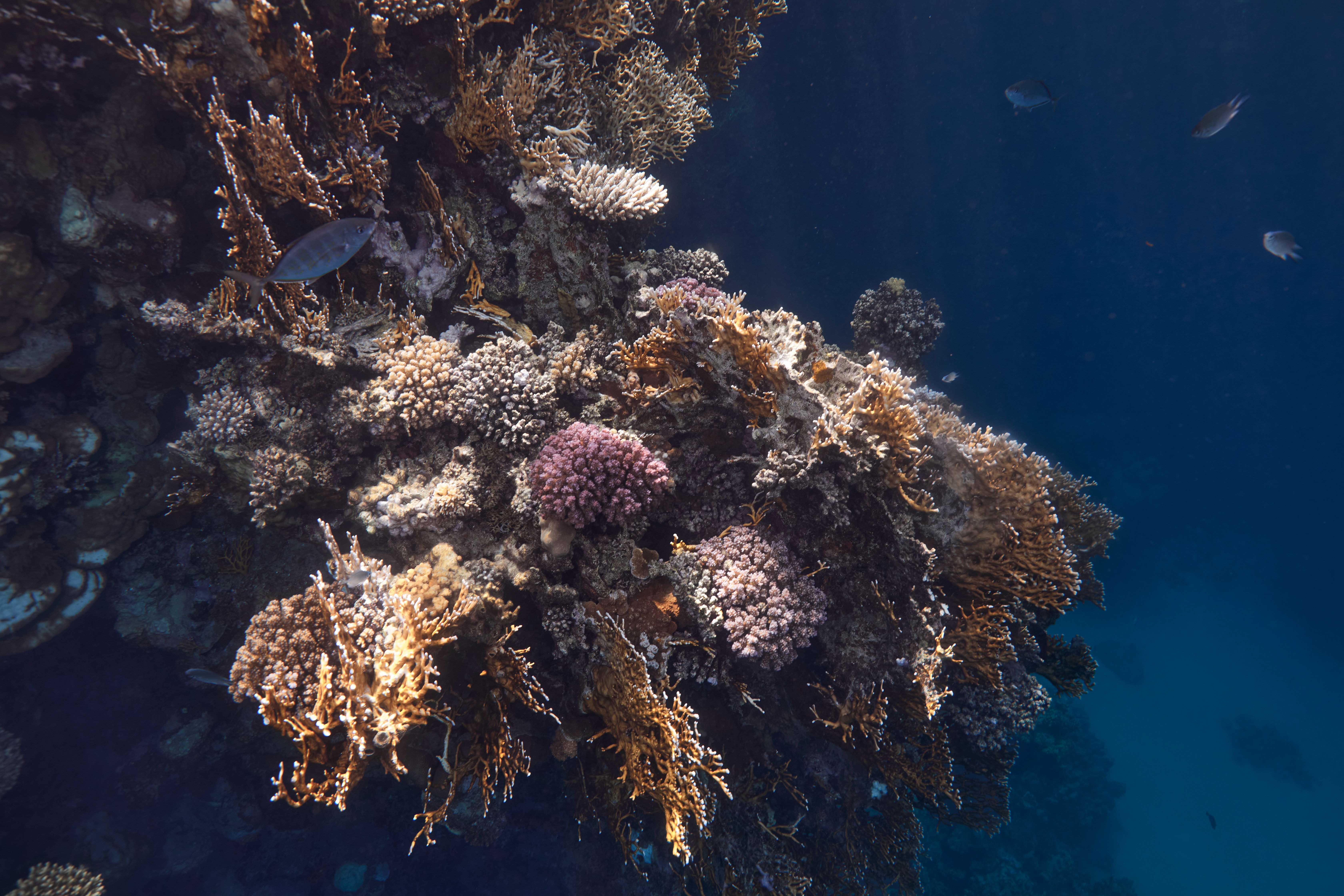
Most itineraries treat the Red Sea as an add-on at the end. It deserves better. The reefs around Marsa Alam and the southern Red Sea are among the healthiest in the region, with coral walls, turtles, dolphins and visibility that makes the diving feel underpriced. The water stays warm enough to swim most of the year, and the summer heat that ruins Luxor is exactly what makes the coast work.
It is also the easiest place to waste money. All-inclusive resorts can be excellent value or grim depending on the property, and the difference is rarely visible in the brochure. Read recent reviews from divers, not from people who never left the pool. Remember the eclipse geography, too. Hurghada and Sharm are outside totality. If you want both reef and eclipse, Marsa Alam is the one coastal base inside the path, with about 5 minutes 30 seconds of darkness.
When to go instead
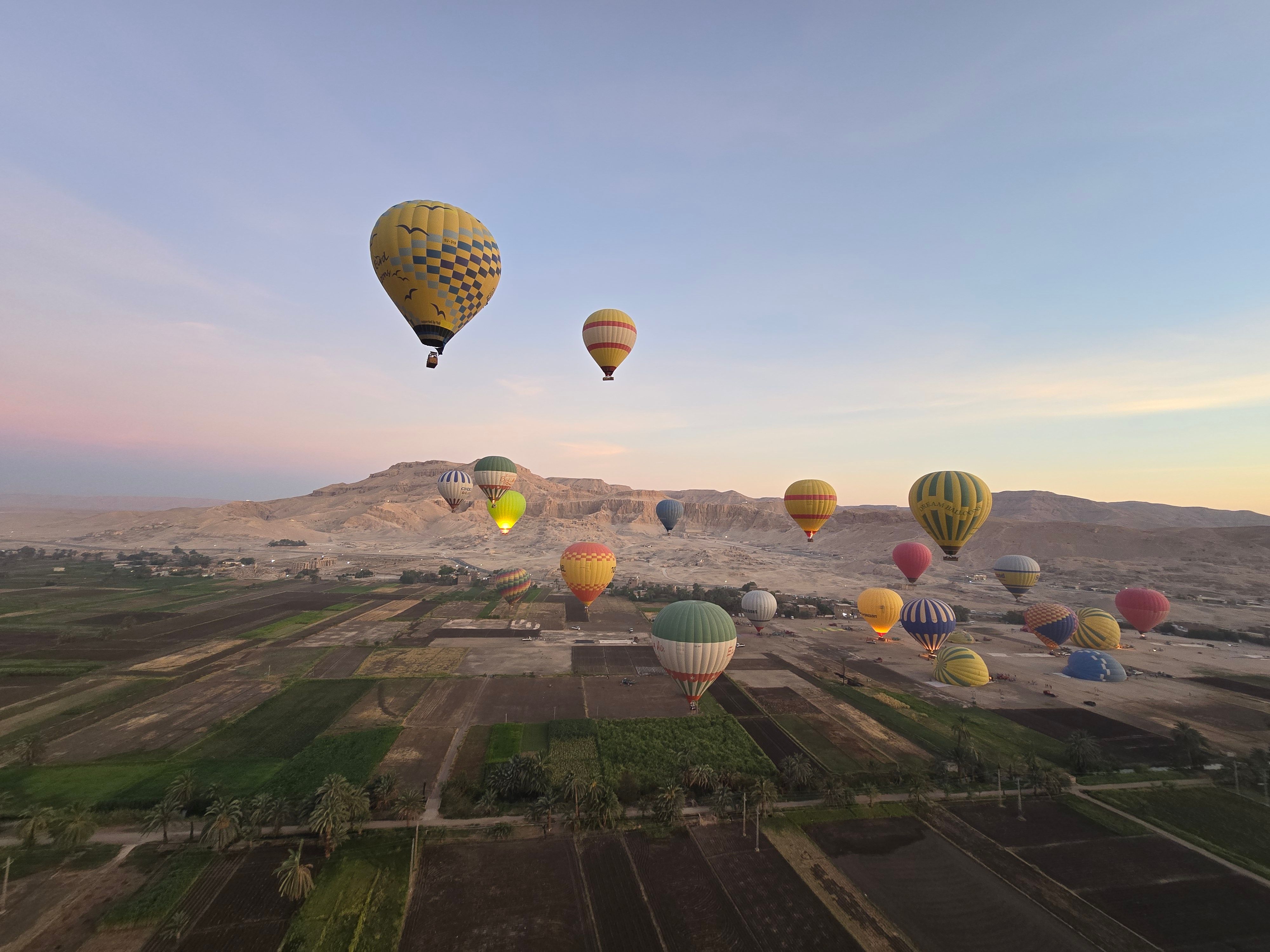
For the classic Cairo, Luxor, Aswan and Nile trip, November is the month I would pick. Luxor’s average high drops to about 29°C, the cruise season is in full swing, and the Christmas crowds have not arrived. October is still hot in Upper Egypt, March can bring khamsin dust, and June to August is brutal unless you are on the coast.
2027 adds two calendar traps. Ramadan is expected to run from about 8 February to 8 March, with Eid al-Fitr around 9 to 11 March. Ramadan falls inside peak season, so hotels and cruises fill with domestic travelers, some restaurants shorten daytime hours, and the evenings are genuinely worth seeing. Western Easter falls on 28 March 2027, and the luxury boats price that week as peak.
If you are going for the eclipse, arrive in Luxor by 30 July, give yourself two buffer days, and leave the Red Sea for after 2 August. If you are not, book late October or November and spend the difference on a better room and a private guide.
Repeat visitors should keep an eye on the rail projects. The first phase of the high-speed network is due in July 2027 on the Ain Sokhna to Marsa Matrouh corridor, via Cairo and Alexandria, not to Luxor. A separate Italian-built luxury train, Guardian of the Nile, is planned to run three-day Cairo to Aswan journeys, with launch expected around 2027. Neither is a reason to plan a 2027 trip around rail. Both are reasons to check again in 2028.
What I would book first
Order matters more than most people think, because the scarce inventory is not the flight.
- Pick the reason. Eclipse, Nile, Red Sea or museums. Each points to a different month and budget. Trying to do all four in ten days is how people end up exhausted and underwhelmed.
- Lock the bed. For eclipse week, accommodation is the constraint. For a Nile cruise, the good dahabiyas sell out months ahead. For the museum, the timed slot is the constraint.
- Book the museum. Use the official site, choose a morning slot, and keep the ticket on your phone. Tickets are non-refundable, so fix your dates first.
- Then flights. Set an alert, compare into Cairo versus Luxor or Aswan, and remember that an internal flight is often cheaper than a long transfer.
- Insurance and visa last. Check the passport has six months validity and a blank page. Apply for the e-visa or budget for the $30 sticker. If you arrive at Luxor or Aswan between May and October 2027, check whether the free emergency-entry scheme applies to your nationality before you pay.
One more rule: do not prepay a full itinerary through a random Instagram guide. Use a licensed operator, get the licence number, and pay by card so you have a chargeback route. The best guides in Egypt are excellent. The worst are a taxi driver with a cousin.
Questions travelers keep asking
Is Egypt worth visiting in 2027?
Yes, for the Nile, the museums and the Red Sea. The eclipse is worth planning around only if you can commit early and tolerate August heat. Otherwise, November 2027 is the better trip.
Is Egypt safe for tourists in 2027?
On the standard tourist circuit, yes, with normal precautions. The UK Foreign Office does not warn against travel to Cairo, Giza, Luxor, Aswan or the Red Sea resorts, though it advises against parts of Sinai and the Western Desert. The bigger day-to-day risks are scams, harassment and heat, not violent crime. Check your government’s advice before you book and again before you fly.
How much does a 2027 Egypt trip cost?
Excluding flights, budget about $40 to $60 a day, $90 to $170 for mid-range, and $250 or more for luxury. Add roughly $1,000 to $2,300 per person for a four-night Nile cruise, depending on the boat. Eclipse week is a separate market with its own prices.
When is the best time to visit Egypt in 2027?
November, for the classic Nile and museum trip. Late July to early August if you want the eclipse. Avoid June to August in Luxor and Aswan unless you are basing yourself on the Red Sea.
Do I need a visa for Egypt in 2027?
Most foreign visitors do. A 30-day tourist visa costs $30 on arrival, and Cairo has been rolling out a digital version at about $36 including the fee. Sharm El-Sheikh resort stays under 15 days can get a free entry stamp. The free summer visa for Luxor and Aswan air arrivals runs from May to October in 2026 and 2027. Your passport needs six months’ validity and a blank page.
Will the high-speed train be running to Luxor in 2027?
No. The first high-speed line, targeted for July 2027, connects Ain Sokhna, Cairo, Alexandria and Marsa Matrouh. The Cairo to Luxor and Aswan line is still under construction and has no announced passenger date.
Is a Nile cruise worth the money?
Yes, if you choose the right boat. A mid-range four-night cruise is about $1,000 per person in high season. A dahabiya is roughly $2,260. The big ship wins on price and facilities. The dahabiya wins on quiet, stops and the feeling that you are actually on the Nile.
The case for Egypt in 2027 is not that the country changed overnight. It is that the trip has become easier and better at the same time: a museum worth a day of its own, a river that rewards slowing down, and a coast most itineraries still treat as an afterthought. The eclipse is a magnificent distraction. Do not let it become the whole plan.